


To mark Sterile Processing Week, from 11 to 17 October, we spoke to Karen at Surgical Holdings about her career in sterile services and the work that goes on behind the scenes to keep operating theatres running. Karen has worked in the sector since 2010 and spent several years as a Sterile Services Manager. She explains what happens to surgical instruments after an operation, the pressures teams face and why their work is so important to patient safety.
Can you tell us a little about your background and your time working in sterile services?
I joined Sterile Services at Orsett Hospital in 2010 as a Shift Supervisor. I had leadership skills but knew very little about the process, so I had a lot to learn. I quickly learned the different stages of sterilisation and why each one matters. I also had to learn how to identify the instruments and understand the types of surgery they are used for. In 2017, I became Quality Manager. I stayed in that role until the Orsett Sterile Services Department closed and the work was split between Southend and Broomfield.
For someone who doesn’t know much about sterile services, what does the department do?
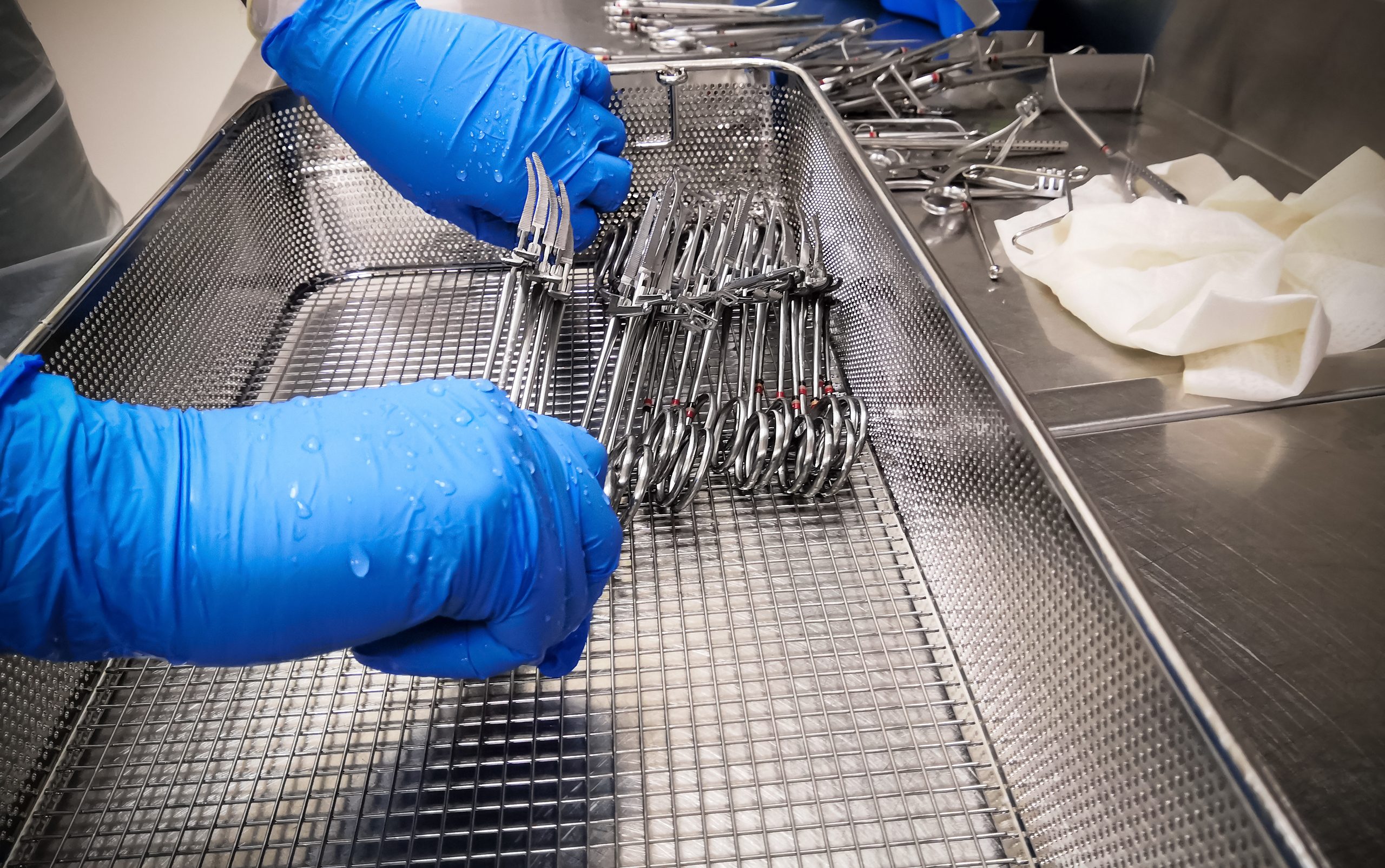
Used medical instruments are sent back from theatres to the Sterile Services Department. The first job is to check that every instrument is present using the specification sheet packed with the set. The instruments are then cleaned in an automated washer-disinfector, which thermally disinfects them at 90°C for at least one minute. After that, each instrument is checked to make sure it is clean, working properly and fit for purpose. The instruments are repacked following the specification sheet and wrapped in specialist autoclave barrier paper or placed in autoclave pouches. They then go through an autoclave cycle at 134°C for between three and three-and-a-half minutes, making them safe to use again.
Why is sterile services so important to patient safety and successful surgery?
The process helps to reduce the risk of infection by destroying the microorganisms that can cause it. This supports safer surgery, a quicker recovery and a better experience for the patient. What happens to a surgical instrument after it has been used in an operation? After an operation, theatre staff put the instruments back into the set and send them to sterile services. When the trays arrive, the team checks them against the specification sheet to make sure everything is there. The instruments are then washed in an automated washer-disinfector, checked, repacked and autoclaved so they are ready to be used again. The whole process takes a minimum of around four hours.
What are some of the biggest challenges sterile services teams face day to day?
The main challenge is making sure all the equipment needed for surgery is ready on time. This can involve a lot of sets, depending on how many theatres are running. Sterile services departments rely on automated washer-disinfectors and autoclaves, and this machinery can develop faults. Teams need to adapt quickly and put contingency plans in place to keep everything running smoothly.
What do you think people would be surprised to learn about working in sterile services?
Probably how fast-paced the work is and how much knowledge of surgical instruments you need to do the job properly.
How important are the quality and condition of surgical instruments?
They are very important. Staff are trained to check that instruments are working properly and are fit for purpose. This takes close attention to detail and knowing when an instrument needs to be repaired. A surgeon cannot carry out successful surgery using instruments that are blunt, broken or rusty. Problems with instruments can also affect a hospital’s reputation and cause patients to lose confidence.
How has sterile services changed since you started working in the sector?
The work has become much more demanding because there are more surgical procedures taking place. Following the MSE merger, three sterile services sites were also brought together into two. There is less handwashing of instruments now because automated washer-disinfectors have improved and more instruments are designed to go through the automated process. Theatre staff have also been encouraged to reduce the number of individually prepacked instruments they use, which helps to reduce the workload. Better computer systems have also improved the way instruments are tracked and traced.
What skills do you need to work in sterile services?
You need to be reliable and methodical, with good attention to detail. You must be able to work quickly, cope well under pressure and stand for long periods.
Now that you work at Surgical Holdings, how does your sterile services experience help you understand what customers need?
My knowledge of surgical instruments helps me make informed decisions. If the instrument a customer needs is out of stock, I may be able to suggest a suitable alternative. I also know how often instruments are used and that hospitals sometimes have only a limited number of sets available. They cannot afford to have instruments out of use for long periods. That means I understand why customers need repairs to be completed quickly, with as little disruption to theatre lists as possible.
During Sterile Processing Week, what would you like to say to the teams working behind the scenes in hospitals across the UK?
They are the hidden heroes and sometimes don’t get the recognition they deserve. They work behind the scenes to make sure operations can go ahead safely and on time. They are an essential cog in the machine. Without them, surgery would come to a halt and waiting lists would be even longer.